





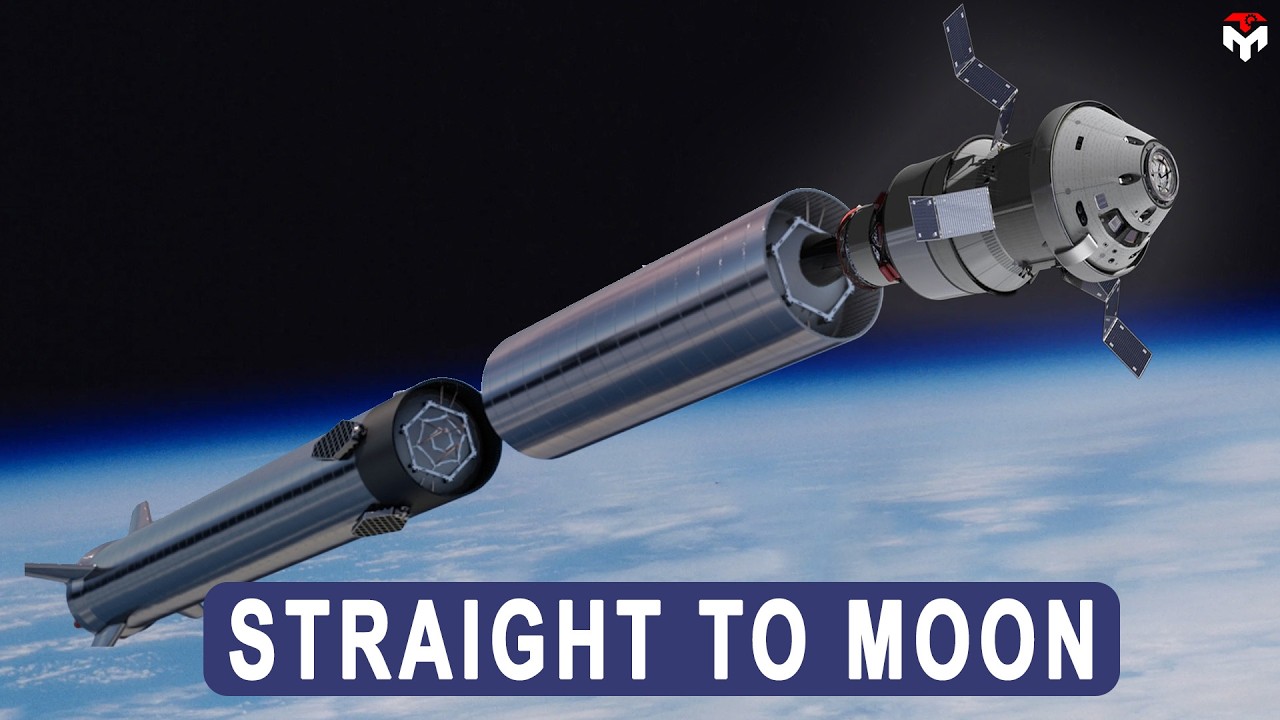
SpaceX’s Genius Solution to Go Straight to the Moon Without NASA SLS
===
#techmap #techmaps #elonmusk #starshipspacex
===
1) SOURCES OF THUMBNAIL
2) SOURCES OF IMAGES AND VIDEOS
Spaceflight Now: https://www.youtube.com/c/SpaceflightNowVideo/videos
Interstellar Gateway – IGW
https://www.youtube.com/@InterstellarGateway/featured
https://x.com/interstellargw
TijnM : https://twitter.com/m_tijn
https://www.youtube.com/channel/UCDA8yz_nQY-0Uxd96-qxYjA
Avid Space: https://twitter.com/LabPadre
https://www.youtube.com/c/LabPadre
Lewis Knaggs: https://www.youtube.com/@LewisKnaggs
Tweets by lewisknaggs42
Me & Grok: https://www.youtube.com/c/SpaceXvision
Evan Karen: https://www.youtube.com/channel/UCDN1X8Fz1oAXX-rBcOWjzmg
3DDaniel: https://x.com/ThreeDeDaniel
https://www.youtube.com/channel/UC1exLLvBo5xgFTsPBafk19g
Truthful: https://x.com/Truthful_ast
Tony Bela : https://twitter.com/InfographicTony/
Erc X: https://twitter.com/ErcXspace
ErcX Space https://www.youtube.com/c/ErcXSpace/
Dale Rutherford: https://twitter.com/Dtrford
===
SpaceX’s Genius Solution to Go Straight to the Moon Without NASA SLS.
NASA has long positioned the Space Launch System as the cornerstone of its return to the Moon—but an alternative approach is already taking shape. In this video, we break down how SpaceX’s architecture challenges the traditional SLS-led model and what it could mean for the future of human lunar missions.
You’ll explore how SpaceX plans to reach the Moon using Starship, orbital refueling, and commercially proven launch systems—without relying on NASA’s heavy-lift rocket. Rather than focusing on a single, ultra-expensive launch, this approach emphasizes repetition, modularity, and operational flexibility. The video examines why this shift matters, where it introduces new risks, and how it reflects a broader transformation in the space industry.
SpaceX’s Genius Solution to Go Straight to the Moon Without NASA SLS.
In this video, we cover:
Why SLS struggles with cost, cadence, and long-term sustainability
How Starship and orbital refueling enable a different lunar mission model
The role of Crew Dragon in separating Earth launch from deep-space travel
Key technical and policy debates surrounding commercial lunar architecture
Whether you follow Artemis closely or are curious about how commercial spaceflight is reshaping exploration, this breakdown provides the context behind the headlines.
If you found this analysis useful, consider liking the video, subscribing for more space-focused explainers, and sharing your thoughts in the comments.
Nasa says the SLS is the fastest way back to the Moon. SpaceX quietly disagrees—and built an entirely different path. One that skips SLS, avoids billion-dollar rockets, and doesn’t wait for perfect hardware. Instead, it breaks the mission into repeatable pieces, launched again and again until the Moon is within reach. This isn’t a loophole or a shortcut. It’s a structural rethink of how lunar missions work—and why the old model is starting to crack.
On the surface, Nasa’s claim on SLS sounds reasonable—and even convincing.
SpaceX’s Genius Solution to Go Straight to the Moon Without NASA SLS.
SLS is enormous: 322 feet tall, more than 15 percent more powerful than the Saturn 5 that carried Apollo astronauts in the 1960s and ’70s. It uses “proven” Space Shuttle hardware—RS-25 engines, solid rocket boosters, familiar systems—specifically to avoid years of clean-sheet development. In theory, this reuse was supposed to accelerate crewed missions, starting with Orion and Artemis 2.
But that promise collapses when you look at how the rocket actually flies.
SLS has one of the lowest launch cadences of any major rocket ever built: one launch after more than a decade of development. Even between Artemis 1 and Artemis 2, Nasa needed three full years. Artemis 2 has now slipped again, pushed to March, largely because of a stubborn liquid-hydrogen leak—a problem that has haunted the program since Artemis 1.
===
Subcribe TechMap: http://tinyurl.com/3z5ysrtf