





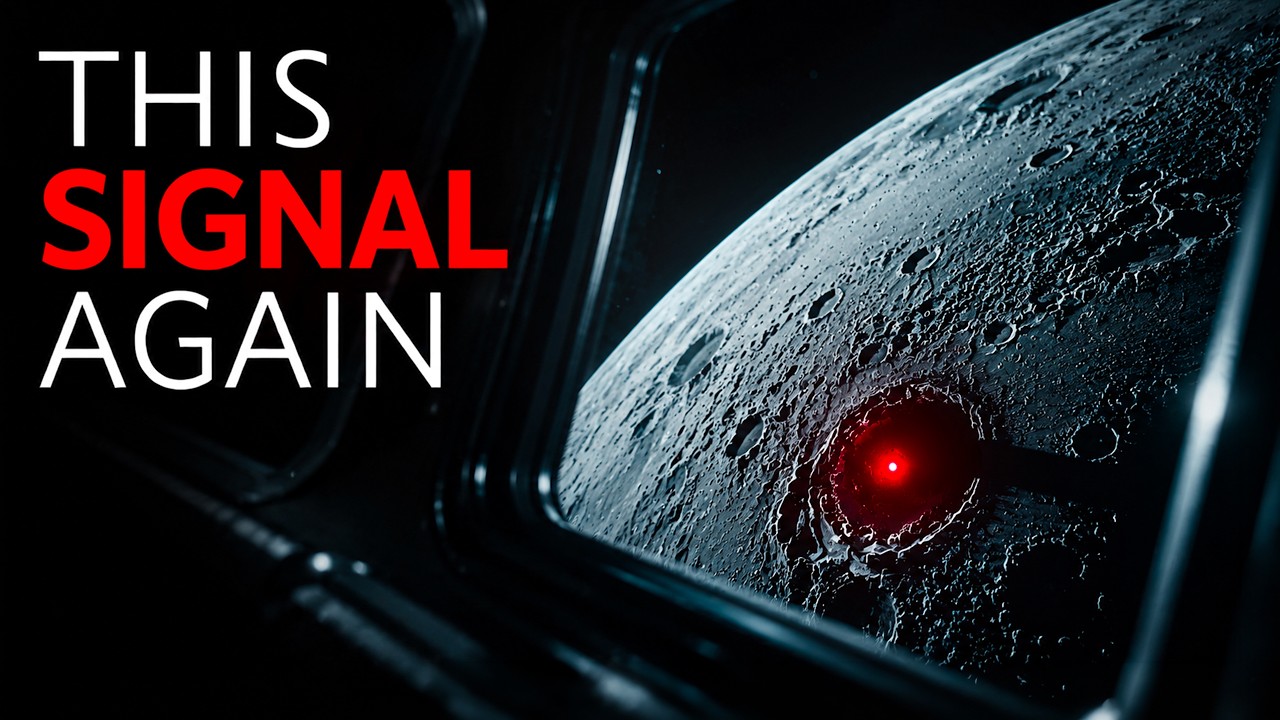
For 54 minutes, four astronauts experienced profound isolation behind the Moon, cut off from all contact with Earth. This video captures their incredible space travel, showcasing the rocket launch, Earth from orbit, and the journey toward the Moon. It emphasizes the unique challenges and feeling of being “alone” during a critical phase of the moon mission, highlighting the vastness of space and the bravery of those undertaking such endeavors as part of the artemis program.
Earth shrank to a blue and white crescent and disappeared behind the lunar limb. The radio went dead. The Sun went out. For nearly 54 minutes the Moon eclipsed our star completely, and inside that eclipse the crew watched five planets emerge in a sky no human had ever seen before. Saturn, Mars, Mercury, Venus, and even Neptune, all visible to the naked eye while the solar corona burned in a halo around the dark disk of the Moon. Their instruments captured a continuous view of the Sun’s outer atmosphere longer than any ground based observatory has ever recorded in a single sitting. Their cameras pulled the entire Orientale basin into a single frame for the first human eyes ever to see it.
Their radiation detectors logged what cosmic rays and solar particles do to a crewed spacecraft past Earth’s magnetic field, the first such measurements ever taken with humans on board past the Moon.At closest approach, Orion was 4,067 miles above the lunar surface, roughly one and a half times the width of the continental United States.
The Moon stopped looking like a disk in the sky and became a wall. At their farthest point, the crew was 252,756 miles from Earth, the new human spaceflight distance record, breaking Apollo 13’s mark from 1970. They flew 694,481 miles in total before splashing down in the Pacific Ocean off the coast of California on April 10, 2026.This is the full account of what they saw, what they detected, and what those 54 minutes of silence mean for everything that comes next. Artemis III in 2027. Artemis IV and the first crewed lunar landing since 1972, targeted for early 2028. Mars, in the decades after.