





TL;DR
- XRP ETF inflows jumped 115% to $23M in the week of June 22–26, pushing total U.S. XRP ETF AUM to $934M — just as Q3 begins, the historically strongest quarter for XRP with a median return of +27.1% over 13 years
- A dormant SHIB wallet from 2024’s bull run moved 598 billion tokens (~$2.7M) through a ForwarderV4 smart contract — the same method used by other reactivated whale wallets last week, pointing to a single centralized institution liquidating old reserves
- Michael Saylor officially approved a Bitcoin sell program at Strategy, raising STRC preferred share yield to 12% and setting a $1.25B BTC sales cap — the company says it has 25.9 months of runway secured between fiat reserves and the new sell limit
- Bitcoin is trading at ~$59,860, below its 200-day EMA of $68,960, with no significant ETF inflows for 55 days — but July historically averages +8.2% for BTC, and seasonal patterns could trigger a Q3 reversal
- Binance exited the EU on July 1 under MiCA rules, sending a wave of European users to Coinbase and OKX — the latter reported an all-time registration record from Europe
XRP ETFs soar 115% ahead of a historically strong quarter for the coin
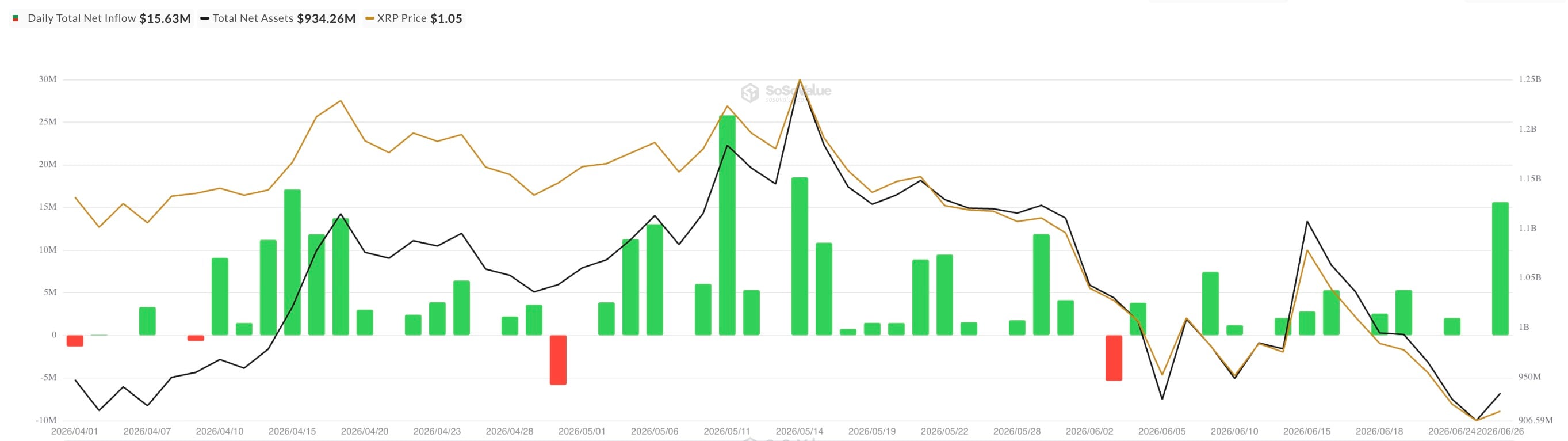
While Bitcoin and Ethereum are recording billion-dollar outflows, during the week from June 22 to June 26, net inflows into XRP funds jumped by 115.7% to $22.99 million, compared with $10.66 million a week earlier, according to SoSoValue.
Large players are clearly buying at the local bottom, right before the start of Q3 2026, which has historically been the most stable period of the year for XRP. Taking the latest inflows into account, U.S. XRP ETFs now have $934.26 million under management, which equals 1.44% of the coin’s total market capitalization.
XRP Records 115% ETF Shift Ahead of Historically Positive Q3; 2024 Shiba Inu (SHIB) Billionaire Appears On-Chain; Saylor Legalizes Bitcoin Sales With 12% Dividend Boost – Morning Crypto Report
This Is Bitcoin’s Worst Halving Cycle Ever
The token’s price, meanwhile, is trapped around $1.05. In this context, June turned out to be brutal, with a 21% decline, but for XRP this is a classic scenario: a strong early-summer sell-off has often become a springboard for a powerful Q3.
Statistics from the past 13 years show that Q3 is a unique period for XRP:
- Median Q3 returns stand at +27.1%, while the average return is +18.2%.
- Since 2020, XRP has closed this quarter exclusively in the green — a streak that has already lasted six years.
In addition, Q3 has a history of breaking bear markets. In 2018, after a prolonged decline, it delivered a +24.4% gain, and in 2022, after a disastrous second quarter, XRP rebounded by +44.5%. Growth inside the quarter usually starts in July, with a median gain of +10.8%, takes a pause for consolidation in August, and ends with a final push in September, where the average result stands at +13.7%.
If the seasonal pattern repeats this time, the historical median of +27.1% would put XRP on course for a confident exit from its prolonged decline and a test of new local highs by the end of September.
A sleeping Shiba Inu coin pool activates 598 billion tokens
Large players in the Shiba Inu ecosystem are returning to the game, and blockchain data from Arkham has recorded the sudden awakening of a wallet that had been inactive since 2024 — the period of the token’s last major price surge. In just one day, two giant transactions passed through the address: 178.16 billion SHIB worth $795,000 and 419.97 billion SHIB worth $1.87 million.
The main intrigue, however, lies in the technical trail. These 598 billion tokens were withdrawn through the ForwarderV4 smart contract — the same method previously used to move funds by other awakened giants from that period last week.
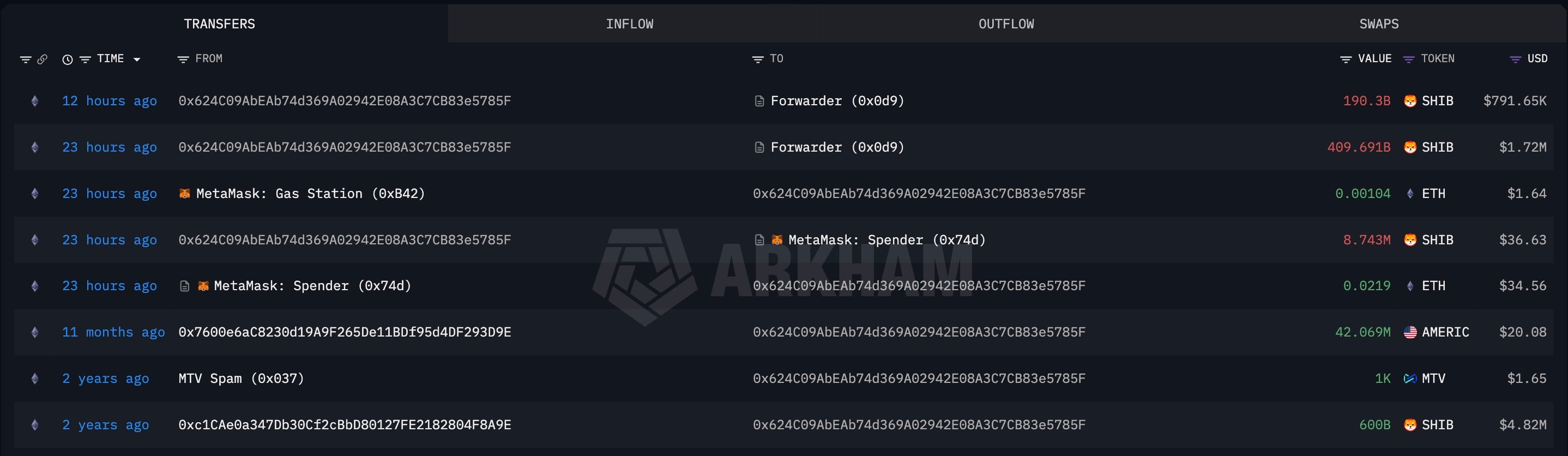
This repeating pattern leads to a clear conclusion: these are not individual retail investors, but a single centralized pool. The use of a single ForwarderV4 gateway proves that behind the chain of different addresses stands a large organization — a custodian, market maker, or OTC desk that has been managing institutional liquidity since the year before last.
For the market, such maneuvers are always a cause for concern. The activation of old billion-token reserves often signals preparation for profit-taking, which could locally pressure the SHIB price.
Strategy raises STRC rate to 12% and prepares Bitcoin for sale
Strategy Inc. chairman Michael Saylor has presented a plan to shore up the company’s securities, called the Digital Credit Capital Framework. In recent weeks, investors and Wall Street analysts have harshly criticized Saylor and demanded that he sell at least $3 billion worth of BTC to cover debts and secure liquid cash.
The situation was also extremely tense because at the end of May, the company had already quietly carried out a test sale of 32 BTC, which seriously rattled the market.
To calm the panic and restore trust, Saylor is raising the annual yield on Strife preferred shares, or STRC, to 12% starting in July. The company will now revise this rate every month, while Saylor’s main goal is to lift the fallen market price of these securities back to their $100 par value.
But the biggest shock for the crypto market was that Saylor officially approved a full-scale BTC Monetization Program. The company has officially set the rules under which it will systematically sell Bitcoin, and Saylor plans to do this in three specific cases:
- To replenish the fiat reserve, with a strict sales limit of up to $1.25 billion.
- To pay dividends and interest if doing so is more beneficial than issuing new shares.
- To buy back the company’s own securities during significant market drawdowns.
Right now, the company has $2.55 billion in net fiat on its accounts, which will be used strictly to pay interest and dividends — enough cash for 17.4 months. If the $1.25 billion Bitcoin sales limit is added to this, the company’s total safety cushion reaches $3.80 billion. This guarantees Strategy 25.9 months of stable operations without raising any new debt at all, says Saylor.
Additionally, Saylor allocated $1 billion each for buyback programs of MSTR shares and STRC securities in order to contain panic during market drawdowns.
Crypto market outlook: Regulatory storm in the EU and on-chain capitulation pressure Bitcoin
The cryptocurrency market is going through a harsh phase of local cleansing due to a complete standstill in U.S. ETF inflows, a large-scale migration of European capital ahead of the strict MiCA deadline, and the sudden awakening of institutional whales from previous cycles, although Bitcoin’s historically bullish July still leaves hope for an imminent seasonal reversal.
Key checkpoints:
- BTC Price Review: Bitcoin is hovering at $59,859.95 (+0.63%), trading under heavy resistance at the 200-day EMA ($68,960) and risking a slide toward the strong $56,850 support zone if the current local bottom is lost.
- July’s historical trigger: June is closing for BTC with a deep -18.7% decline, but historical statistics point to strong July seasonality, with an average gain of +8.24% and a median gain of +8.09%, which often turns the start of Q3 into a launch point for a powerful rebound.
- 55-day drought in spot ETFs: U.S. regulated funds have completely deprived Bitcoin of fresh capital, recording no significant direct inflows since May 4, leaving the market without its main liquidity driver for almost two months.
- Regulatory exodus from the EU on July 1: Binance’s official exit from the European market due to the entry into force of MiCA rules triggered a fierce battle for users between Coinbase and OKX, with the latter already reporting an all-time record in new registrations from Europe.
- RWA expansion and Ondo’s dominance: The real-world asset tokenization sector is surging to new highs, with Ondo capturing 74.5% of the on-chain ETF market, while the Base network has overtaken Ethereum in USDC Morpho liquidity.
You Might Also Like