





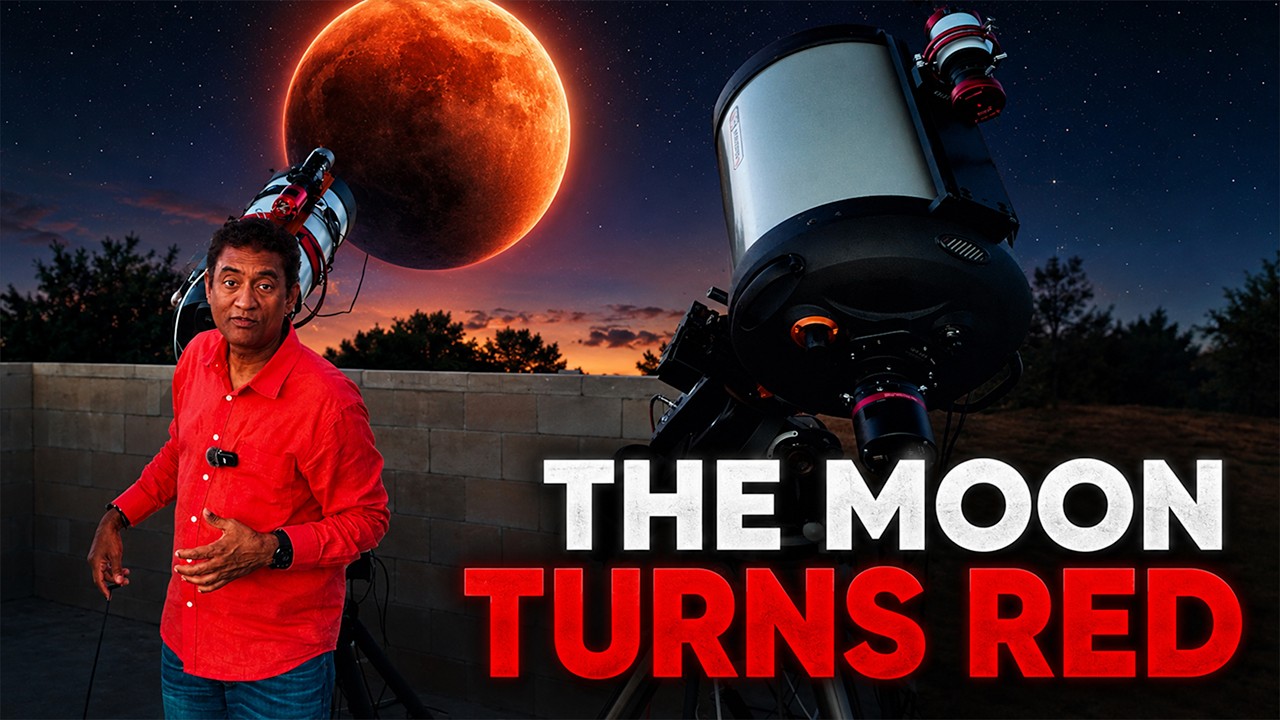
On Thursday night, the Moon slides into Earth’s shadow and turns
a deep red. Here’s exactly when to look up, what you’ll see at
each stage, and why it happens at all.
Everything below is Central Time. Convert for your location.
⏱ ECLIPSE TIMELINE — Thursday, August 27 (Central Time)
Penumbral begins — 8:23 PM CDT / 01:23 UTC
The Moon dims slightly. Subtle — most people miss it.
Partial (umbral) begins — 9:33 PM CDT / 02:33 UTC
Earth’s shadow takes a visible bite out of the Moon.
Maximum eclipse — 11:12 PM CDT / 04:12 UTC
Peak color. 96.3% of the Moon inside Earth’s umbra.
Partial ends — 12:51 AM CDT / 05:51 UTC
Penumbral ends — 2:01 AM CDT / 07:01 UTC
Eastern: add 1 hour. Mountain: subtract 1. Pacific: subtract 2.
This is a deep partial eclipse — a thin bright sliver stays lit
at maximum. It’s the deepest partial lunar eclipse until
December 31, 2028.
Peak color. [96%] coverage from the Leander / Austin area.
Visible across North America, South America, and Canada.
🔴 WHY DOES THE MOON TURN RED?
The Moon isn’t losing all its light — it’s losing all its BLUE
light. Sunlight passing through the edge of Earth’s atmosphere
gets scattered, and blue scatters away first. Only the red
wavelengths bend through and reach the lunar surface.
You’re watching every sunrise and sunset on Earth, projected
onto the Moon at once.
📅 CHAPTERS
0:00 What’s happening Thursday
1:00 The lunar eclipse geometry
2:00 Why the Moon turns red
3:00 The full timeline
5:00 Blood moons through history
Go outside for this one. It costs nothing, needs no equipment,
and it’s the kind of thing people have been staring at for
thousands of years.
Clear skies, Rayliens.
#BloodMoon #LunarEclipse #Astronomy #Astrophotography