

What You Are About To Accomplish
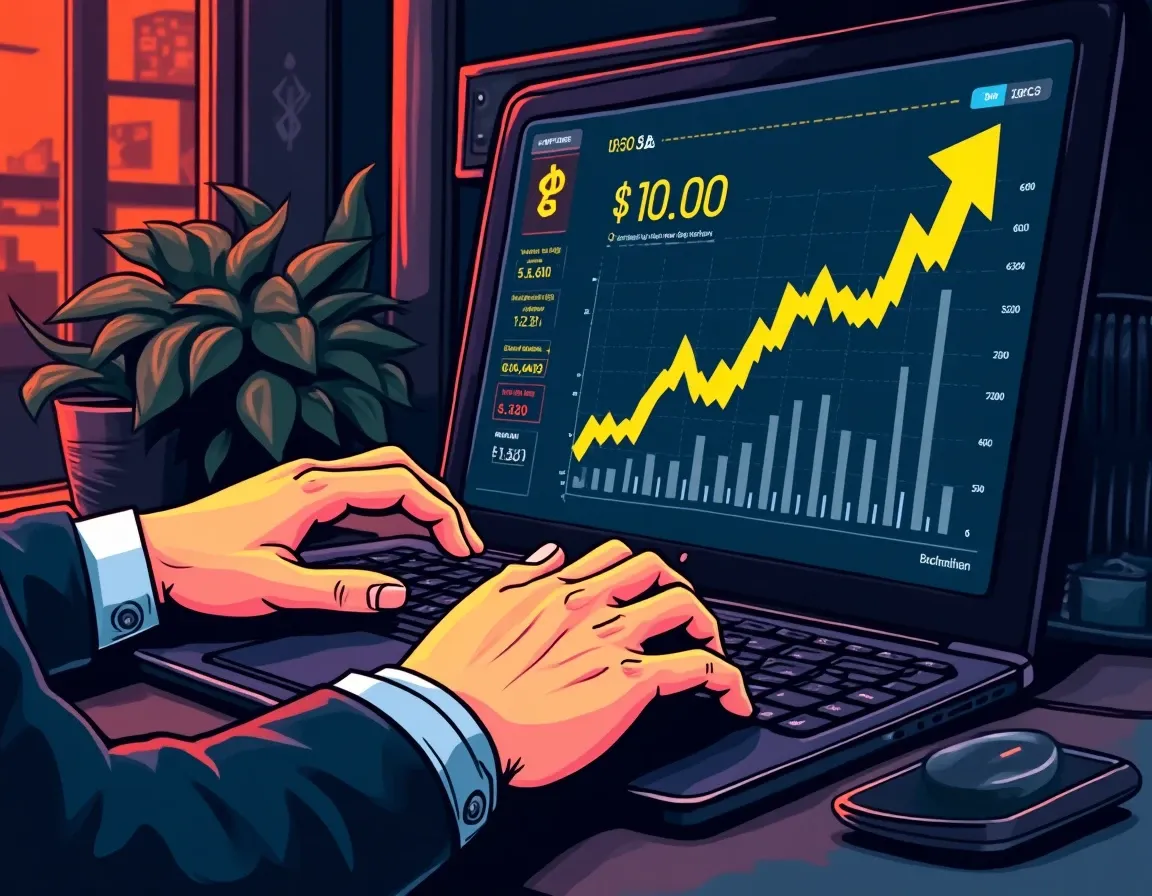
A 5.63 percentage point jump to 12.35% on Sky stUSDS demands immediate verification. On $100,000 deployed, this rate delivers $12,350 annually. On $500,000, the figure is $61,750. But only if the rate holds.
The problem is that displayed APY does not tell you whether the increase is funded by protocol revenue, temporary token emissions, or governance surplus drawdown. If the rate is subsidized by emissions, it will collapse when the program ends. If it is driven by genuine utilization or a durable governance vote, it may persist for months.
This article walks you through the 48-hour protocol to audit Sky’s DSR mechanism, protocol revenue sources, and SKY token emission schedule before deploying capital into a rate that may or may not be sustainable. By the end, you will know how to distinguish a genuine income opportunity from a temporary incentive spike that will cost you exit gas fees and opportunity cost within 90 days.
Prerequisites: You need a wallet, access to stablecoin income platforms, and familiarity with reading governance forums and on-chain analytics dashboards. If you are evaluating whether to move capital from another stablecoin venue paying 5-6%, the verification process below will give you the data to decide.
Step 1: Confirm The Rate Source On Sky Lending And Distinguish stUSDS From sUSDS

Sky offers two stablecoin products with different rate mechanisms. sUSDS is the Sky Savings Rate, currently paying 3.60% APY, backed by protocol surplus and set by governance vote. stUSDS is a lending market token on Sky Lending, where rates vary with utilization and governance-set incentives.
If the advertised 12.35% rate is on stUSDS, you are looking at a lending market rate, not the base savings rate. Go to the Sky Lending interface and locate the stUSDS pool. The interface displays current APY, total value locked, and the rate composition breakdown. The critical detail is whether the displayed rate is labeled “Base APY” or “Base APY + Rewards.”
If the interface shows 12.35% as “Base APY + Rewards” and the base component is near zero, the entire rate is being paid in SKY token emissions, not from lending fees or protocol revenue. This is the first red flag. In November 2026, Sky Lending’s USDS pool was paying 4.64%, with 100% of the yield sourced from emissions. That rate is not sustainable without continuation of the reward program.
Check the reward token allocation schedule. Sky’s documentation site and governance forum will list the total SKY tokens allocated to the stUSDS incentive program and the distribution timeline. If the allocation runs out in 30-90 days, the rate will collapse to the base lending APY, which in most recent periods has been 1-2% for stablecoins.
Reasoning: A rate funded entirely by emissions is temporary by design. The relevant question is not whether it will end, but when. If you are deploying $200,000 for 60 days and the emission program has 90 days remaining, you may capture the rate before it collapses. If the program ends in two weeks, you will pay gas fees to enter and exit for minimal gain.
Step 2: Audit Sky Protocol Revenue Against The Implied Cost Of The Rate

Sky’s ability to sustain high rates depends on protocol revenue. The most recent 30-day data shows Sky generated $27.13 million in fees, with $13.47 million in protocol revenue. Annualized, that is $161.64 million in revenue.
Now calculate the implied annual cost of paying 12.35% on $162 million TVL. The figure is $20.007 million per year. If stUSDS TVL is $162 million and the protocol is paying 12.35%, it needs to allocate $20 million annually to sustain that rate, assuming no utilization-driven income from borrowers.
Compare that figure to Sky’s total protocol revenue. At $161.64 million annualized, the protocol generates enough surplus to cover a 12.35% rate on $162 million TVL, but only if it allocates roughly 12.4% of total revenue to this single product. That is a large allocation for one stablecoin lending pool.
Go to DefiLlama’s Sky protocol page and review the revenue breakdown by source. Sky’s revenue comes from stability fees on DAI and USDS lending, liquidation penalties, trading fees from the Peg Stability Module, interest income from the Direct Deposit Module, and real-world asset yields from tokenized US Treasury positions held through Monetalis, BlockTower, and Sky Endgame Allocator vehicles.
The largest revenue source in 2026 is fees from Spark, Grove, and other agents deploying Sky capital into credit and yield strategies. Real-world assets provide the second-largest stream, yielding approximately 4.5% on several billion dollars of Treasury exposure. Stability fees from crypto-collateral lending, once the dominant revenue source from 2019-2022, now represent a smaller share of the total.
If the protocol is earning $13.47 million per month and the stUSDS program costs $1.67 million per month ($20 million annualized divided by 12), the cost is 12.4% of monthly revenue. That is sustainable if governance prioritizes stUSDS incentives, but it is not a trivial allocation.
Failure mode: If Sky’s TVL fell 15% in early November 2026 (as reported), and revenue is correlated with TVL, then monthly revenue may be declining while the stUSDS rate commitment remains fixed. That creates a mismatch that governance will resolve by reducing rates or reallocating emissions.
Check Token Terminal for quarterly revenue trends. If revenue is flat or declining while TVL drops, the protocol cannot sustain elevated rates indefinitely without burning surplus.
Step 3: Review Governance Forum For Recent Rate-Setting Votes And Emission Schedules
Sky’s rates are governance-determined, not market-determined. The Sky Savings Rate is set by DAO vote and can be adjusted in any direction at any time. The stUSDS lending rate reflects both utilization and governance-set incentive structures.
Go to the Sky governance forum and search for recent proposals related to stUSDS incentives, Sky Savings Rate adjustments, or SKY token emission programs. Sort by date and look for votes that passed in the two weeks preceding the rate jump.
If a governance proposal allocated a fixed pool of SKY tokens to stUSDS over a 90-day period, you can calculate the rate duration. Divide the total SKY allocation by the weekly emission rate to determine when the program ends. If the allocation is front-loaded (higher emissions in the first 30 days, declining thereafter), the displayed 12.35% rate will decay before the program officially ends.
If the rate increase was driven by a Sky Savings Rate vote rather than a stUSDS-specific emission program, the increase is more durable. The Sky Savings Rate averaged 3.62% over the six months preceding November 2026 and was raised to 3.80% on October 7, 2026. A jump from 3.80% to 12.35% would require a dramatic governance vote, likely tied to competitive pressure from other stablecoin venues or a strategic decision to attract TVL during a market downturn.
Cross-reference the governance forum with Sky’s documentation site for the official emission schedule. If no schedule is published, the rate is likely discretionary and can be changed without advance notice.
Reasoning: Governance-driven rates are persistent until governance votes to change them. Emission-driven rates are persistent until the allocated tokens run out. Market-driven rates (utilization-based) are persistent until borrowing demand normalizes. You need to know which mechanism is driving the 12.35% rate to estimate how long it will last.
Step 4: Compare stUSDS Rate To Sky Savings Rate And Peer Stablecoin Venues
The Sky Savings Rate provides a baseline expectation for what Sky can sustainably pay on stablecoins without subsidies. If sUSDS is paying 3.60% and stUSDS is paying 12.35%, the 8.75 percentage point spread must be explained by either utilization income (borrowers paying fees) or temporary incentives (SKY emissions).
Check Sky Lending’s stUSDS utilization rate. If utilization is 70-90%, borrowers are paying high rates to access liquidity, and the protocol is capturing spread between the borrow rate and the supply rate. High utilization can sustainably support elevated supply rates. If utilization is below 50%, the rate is likely subsidized.
Compare the stUSDS rate to peer venues offering USDS or other stablecoin yields. As of November 2026, Aave was offering approximately 5.56% on USDT, Compound was offering variable rates on USDC in the 4-6% range, and Sparklend was offering 5.07% on USDS. If stUSDS is paying 12.35% while peers are paying 4-6%, the spread suggests either a temporary incentive program or a utilization spike unique to Sky Lending.
Go to Aavescan and review the historical stUSDS APY chart. If the rate jumped from 6.72% to 12.35% in one week and no peer venues moved in the same direction, the jump is Sky-specific, not market-wide. That points to governance action or an emission program rather than a broader DeFi yield environment shift.
If you are currently holding USDC on Aave at 5.56% and considering a move to stUSDS at 12.35%, the spread is 6.79 percentage points. On $200,000, that is $13,580 annually. But you need to subtract gas fees for the move (approximately $50-$150 depending on Ethereum gas prices) and account for the risk that the stUSDS rate collapses within 30 days, forcing another move and another gas fee.
The break-even timeline is the point at which the incremental yield from the higher rate exceeds the cost of the move. If gas costs $100 and the spread is 6.79%, you break even in 5.4 days. If the rate lasts longer than six days, the move is profitable. If it collapses in three days, you lose money.
This is why verifying the rate source and emission schedule is critical. A governance-set rate tied to the Sky Savings Rate may persist for months. An emission-driven spike may collapse in two weeks.
Step 5: Verify Total Value Locked Trends And Exit Liquidity Before Deploying
A rate jump accompanied by declining TVL is a red flag. In early November 2026, Sky’s total value locked fell approximately 15% to $4.42 billion, while USDS circulating supply dropped to $5.59 billion. If stUSDS TVL was $162 million at the time of the rate jump, check whether that figure was stable, increasing, or decreasing over the preceding two weeks.
Go to DefiLlama and view the Sky protocol TVL chart. If TVL is declining while the protocol is raising rates, governance is likely trying to attract deposits to stabilize the decline. That strategy works if the rate increase is funded by sustainable revenue, but it accelerates the problem if the rate is funded by surplus drawdown or temporary emissions.
Check stUSDS-specific TVL on Sky Lending. If TVL in the stUSDS pool is increasing despite broader Sky TVL decline, the rate increase is working to attract deposits. If stUSDS TVL is also declining, the rate increase has not yet reversed the outflow, and you are considering entry during a period of net redemptions.
Exit liquidity matters. If you deploy $500,000 into stUSDS and the pool has $162 million TVL, you represent 0.3% of the pool. That is small enough to exit without material slippage under normal conditions. If TVL drops to $100 million and you still hold $500,000, you now represent 0.5% of the pool, and a large withdrawal could move the rate or face delayed processing if utilization is high.
Review the Sky Lending terms for withdrawal restrictions. Most DeFi lending protocols allow instant withdrawal up to available liquidity (total supplied minus total borrowed). If utilization is 85%, only 15% of TVL is available for immediate withdrawal. If you need to exit $500,000 and available liquidity is $24.3 million (15% of $162M), you can exit without delay. If available liquidity drops below your position size, you will need to wait for borrowers to repay or accept a delayed withdrawal.
Failure mode: Deploying into a high-rate pool during a TVL decline increases the risk that the rate collapses before you can exit profitably, or that exit liquidity tightens, forcing you to accept a lower realized yield than the advertised APY.
Step 6: Calculate The Incremental Yield Against Opportunity Cost And Gas Fees
Assume you are currently holding $200,000 in USDC on Aave at 5.56%. Moving to stUSDS at 12.35% generates an incremental 6.79 percentage points, or $13,580 annually. If the rate lasts 30 days, the incremental yield is $1,131. If gas fees total $100 for the round-trip (enter and exit), your net gain is $1,031 for 30 days of exposure.
Now calculate the downside scenario. If the rate collapses to the base lending APY of 1.5% after 15 days, you earn 12.35% for 15 days ($677) and 1.5% for the remaining 15 days ($82), for a total of $759. Subtract $100 in gas fees, and your net gain is $659. Compare that to staying in Aave at 5.56% for 30 days, which would have earned $920. In this scenario, the move cost you $261 in opportunity cost.
The decision depends on your confidence in the rate duration. If you have verified that the rate is driven by a governance vote tied to the Sky Savings Rate and no emission schedule suggests a near-term end, the probability of a 30-90 day rate persistence is high. If you have verified that the rate is driven by a 60-day SKY emission program, you can size into the position with confidence that the rate will last at least 45 days.
If you cannot verify the rate source, do not move the capital. The asymmetry favors staying in the lower-rate, known-duration venue over chasing an unverified spike that may collapse before you break even on gas fees.
Common Failure Modes And How To Avoid Them
The most common failure mode is deploying into a rate spike without verifying the emission schedule, then watching the rate collapse 10 days later. This happened repeatedly in 2024-2026 across multiple DeFi protocols offering “limited-time” liquidity mining incentives that were not clearly labeled as temporary.
Second failure mode: assuming that a governance-set rate is permanent. The Sky Savings Rate is variable and tracks US Treasury yields and Sky governance allocator decisions. If the Federal Reserve cuts rates, Treasury yields fall, and Sky’s real-world asset income declines, governance will vote to reduce the Sky Savings Rate. A rate that is sustainable at 4.5% Treasury yields becomes unsustainable at 3.0% Treasury yields.
Third failure mode: ignoring TVL trends. A high rate on declining TVL is a distress signal, not an opportunity signal. If the protocol is bleeding deposits despite raising rates, the raise is not working, and governance will either cut the rate to preserve surplus or double down with a larger emission program that accelerates the token supply inflation.
Fourth failure mode: failing to account for gas fees in the break-even calculation. Moving $50,000 for a 6.79pp spread requires the rate to last at least 10 days to break even on $100 gas fees. Moving $500,000 requires only one day. The position size changes the risk-reward profile of chasing rate jumps.
Fifth failure mode: conflating stUSDS and sUSDS. They are different products with different rate mechanisms. sUSDS is lower-risk, lower-rate, backed by protocol surplus. stUSDS is higher-risk, higher-rate, subject to utilization volatility and governance incentive changes. Do not assume that a 12.35% rate on stUSDS implies the same rate on sUSDS.
What To Do Next
If your verification confirms that the 12.35% rate is driven by a durable governance vote or a 90-day emission program with 60+ days remaining, size into the position proportional to your confidence in the rate duration. A 60-day rate at 12.35% on $200,000 delivers $4,054 in incremental yield over a 5.56% baseline. That is worth capturing.
If your verification reveals that the rate is driven by a 30-day emission program with two weeks remaining, the risk-reward does not favor entry unless your position size is large enough to break even on gas fees within 14 days.
If you cannot verify the rate source because the governance forum has no recent votes, the emission schedule is not published, and the Sky documentation site does not explain the rate composition, do not deploy. The absence of transparency is itself a red flag.
Set a calendar reminder to re-verify the rate and TVL every seven days. Rates change, emission programs end, and governance votes reverse. A rate that is sustainable today may not be sustainable next month. Sky USDS rate movements follow governance cycles, and those cycles are visible if you are monitoring the right sources.
If you deploy capital, monitor utilization daily. A utilization spike from 50% to 90% changes exit liquidity and may signal that the rate is about to fall as borrowing demand normalizes. If utilization falls from 70% to 40%, the rate will likely fall as well unless governance votes to maintain it through emissions.
The Takeaway
A 5.63 percentage point rate jump to 12.35% on stUSDS is not self-explanatory. The displayed APY does not tell you whether the rate is funded by protocol revenue, temporary SKY emissions, or governance surplus drawdown. It does not tell you whether the rate will persist for 30 days or 180 days. It does not tell you whether TVL is stable or collapsing.
The verification protocol above gives you the data to answer those questions within 48 hours. You audit the rate composition on Sky Lending to distinguish base APY from rewards. You compare protocol revenue to the implied cost of the rate. You review governance forum votes and emission schedules to determine rate duration. You compare the stUSDS rate to the Sky Savings Rate and peer stablecoin venues to identify whether the spread is justified by utilization or subsidized by incentives. You verify TVL trends and exit liquidity to assess whether you can exit profitably if the rate collapses.
This is not optional due diligence. This is the minimum verification required to distinguish a genuine income opportunity from a temporary incentive spike that will cost you gas fees and opportunity cost. The next rate jump will demand the same protocol. The data sources are public, the verification is repeatable, and the asymmetry favors caution over speed.
Frequently Asked Questions
Is Sky stUSDS 12.35% APY sustainable long-term?
Sustainability depends on the revenue mix funding the rate. If the 12.35% is driven by temporary SKY token emissions rather than protocol revenue from real-world assets or stability fees, it will collapse when emissions end. Check the Sky governance forum for the emission schedule and compare monthly protocol revenue ($13.47m in the most recent 30-day period) against the implied annual cost of paying 12.35% on $162M TVL (approximately $20M/year). If emissions are covering the gap, the rate is unsustainable.
What is the difference between stUSDS and sUSDS?
sUSDS is the Sky Savings Rate product, currently paying 3.60-3.80% APY, backed by protocol surplus and governed by DAO vote. stUSDS is a risk capital token offered through Sky Lending, with rates that vary based on utilization, collateral demand, and governance-set incentive structures. The stUSDS rate is typically higher because it reflects lending market dynamics, not just surplus allocation. They are two distinct products with different risk and rate profiles.
How do I verify Sky protocol revenue in real-time?
Use DefiLlama’s Sky protocol page to view 30-day fees and revenue. As of the most recent data, Sky generated $27.13M in fees and $13.47M in protocol revenue over 30 days. Compare this figure to the implied cost of the advertised APY multiplied by total value locked. If the cost exceeds revenue, the protocol is subsidizing rates through token emissions or surplus drawdown, both of which are temporary. Cross-reference with Token Terminal for quarterly revenue breakdowns by source.
What causes stUSDS rates to jump 5.63 percentage points in one week?
Rate jumps of this magnitude typically signal one of three events: a governance vote increasing the Sky Savings Rate or lending incentives, a temporary SKY token emission program to attract TVL, or a sharp utilization increase driven by external collateral demand. Check the Sky governance forum for recent votes, review the emission schedule on the Sky documentation site, and compare utilization rates before and after the jump using Aavescan. Market-driven utilization jumps tend to persist longer than governance-set emission spikes.
How long does a Sky stUSDS rate increase typically last?
Governance-driven rate increases tied to the Sky Savings Rate tend to persist for months, adjusting gradually with Federal Reserve policy and Treasury yields. Emission-driven spikes tied to liquidity mining or SKY reward programs typically last 30-90 days until the allocated tokens are distributed. Utilization-driven jumps reverse as soon as borrowing demand normalizes. Audit the rate source using governance forum votes and emission schedules to estimate duration. The Sky Savings Rate has averaged 3.62% over the past six months, providing a baseline expectation for non-incentivized yields.
The Weekly Yield Report
You just walked through the 48-hour protocol to audit a 5.63pp stablecoin rate jump. That rate will change again, and the next one demands the same verification.
Every Thursday: where crypto yield actually is – stablecoins, liquid staking and DeFi lending, with the risk named next to the rate and what changed since last week.
Free. No trade calls, no allocations, no hype. Unsubscribe in one
click.